Project Overview
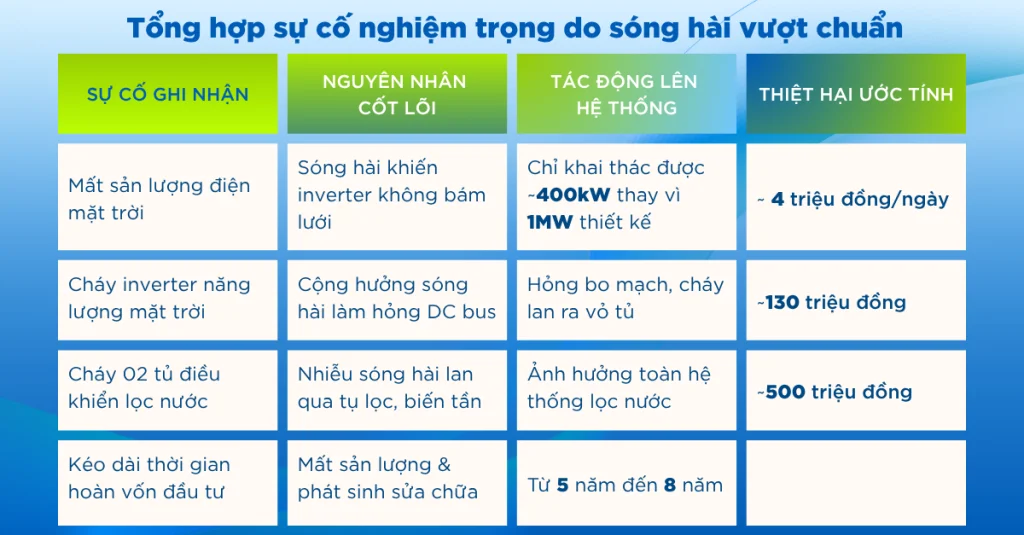
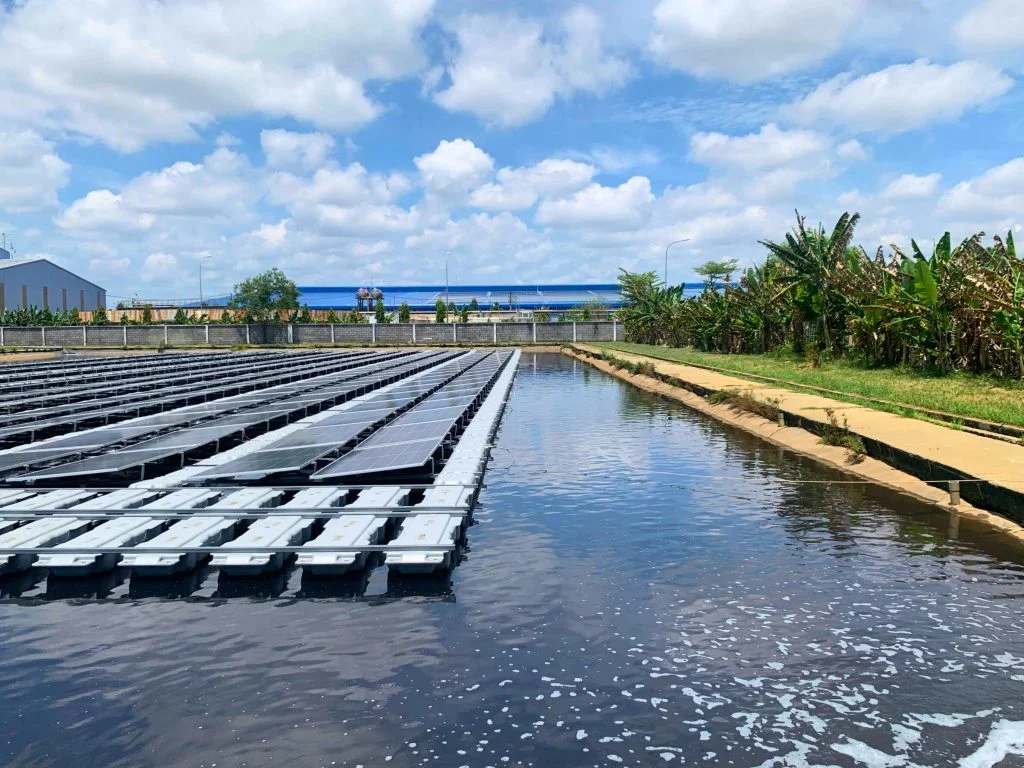
At a water treatment plant located in an industrial zone in Central Vietnam, a 1 MWp solar PV system was developed to reduce energy costs and support the facility’s sustainability objectives. However, immediately after the system was connected, it was unable to synchronize with the grid because harmonic distortion levels exceeded acceptable technical limits.
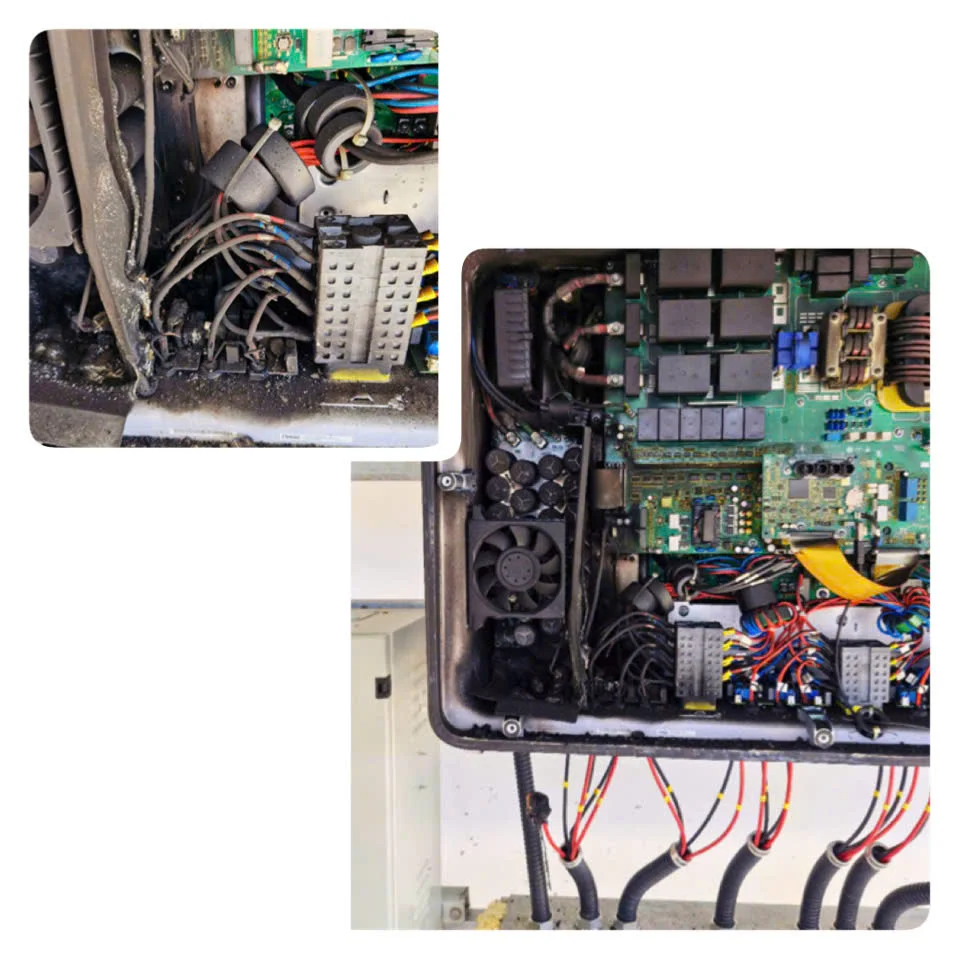
As a result, the solar inverters repeatedly triggered faults, preventing the entire PV system from generating electricity at its designed capacity.
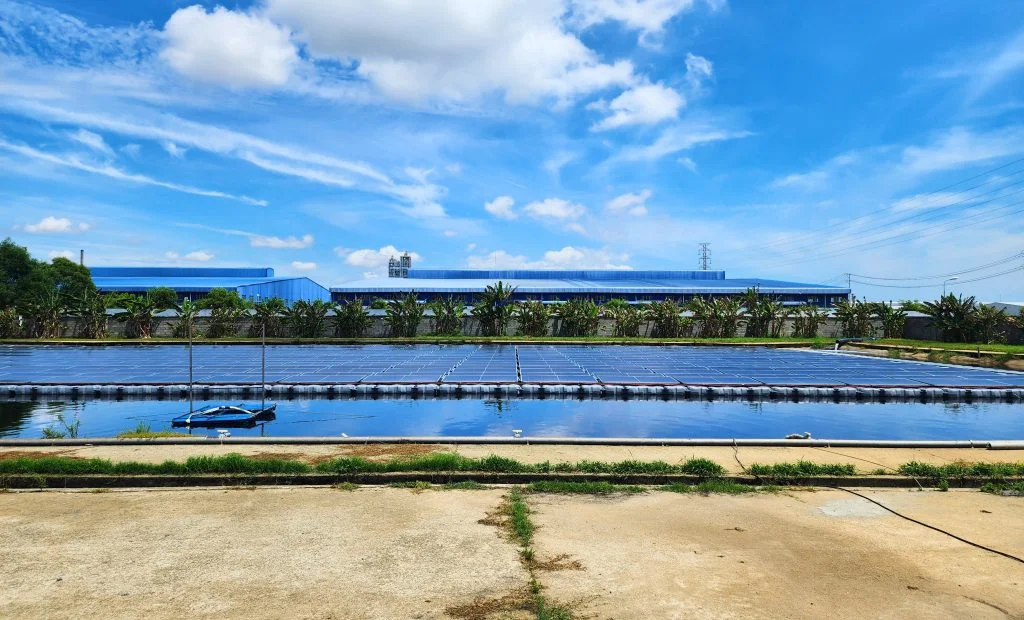
Project Information
| Item | Details |
|---|---|
| Industry / Sector | Water extraction, treatment and supply |
| Location | Quang Nam, Vietnam |
| Project Type | Harmonic mitigation for a solar PV system |
| Solar PV Capacity | 1 MWp |
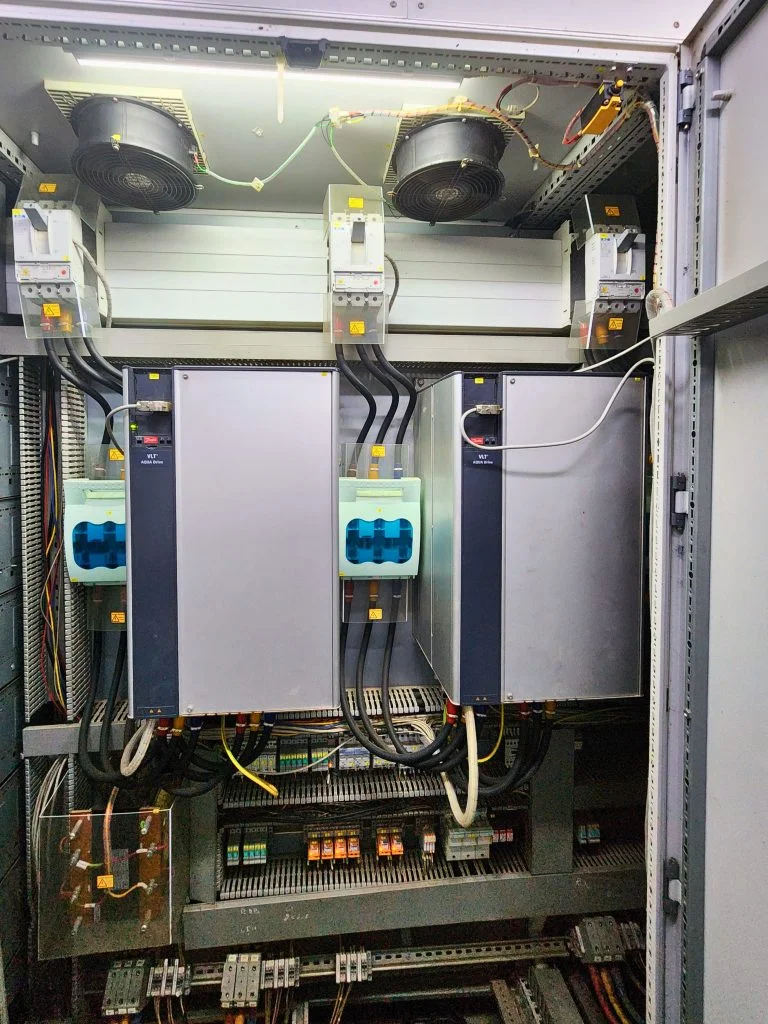
| Installed Equipment | Revcon RHF Active 150A Active Harmonic Filter |
| Implementation Time | 3 weeks |
Measurements taken at the point of connection between the solar inverters and the plant’s main electrical switchboard showed that the power quality parameters significantly exceeded the reference limits.
| Parameter | Measured Value | Reference Limit |
|---|---|---|
| TDD – Total Demand Distortion | 35% | 12% |
| THDv – Total Harmonic Distortion of Voltage | >8% | 5% |
Under these conditions, the inverters were unable to enter grid-connected operating mode. Every day the system remained offline meant another day of lost renewable energy generation from an asset that had already been fully invested in and commissioned.
PowerMore’s Scope of Work
After conducting an on-site assessment and analyzing the plant’s power quality data, PowerMore’s engineering team identified the primary source of harmonic distortion around the point of common coupling between the solar inverter cluster and the plant’s main electrical switchboard.
This location is directly affected by distorted currents generated by nonlinear loads and also serves as the interface between the solar generation system and the facility’s internal power distribution network. Without addressing harmonic distortion at this critical point, grid synchronization would continue to be disrupted.
PowerMore’s scope of work included:
- Assessing the existing electrical system and grid connection point
- Measuring and analyzing power quality parameters
- Engineering a harmonic mitigation solution for the point of connection
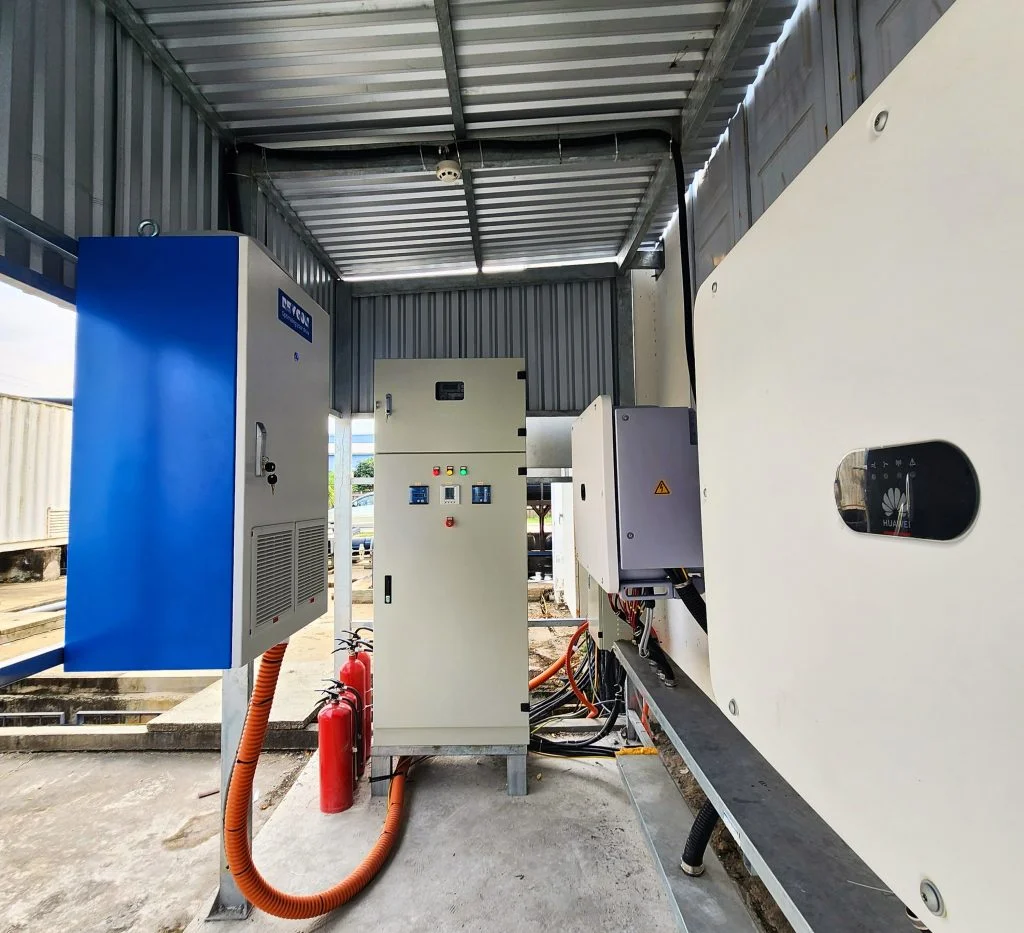
- Supplying a Revcon RHF Active 150A active harmonic filter
- Installing the harmonic filter in a dedicated electrical cabinet
- Connecting the equipment directly to the busbar at the grid connection point
- Conducting technical testing and commissioning after installation
The Revcon RHF Active 150A was selected to provide active harmonic compensation at the grid connection point. The system automatically responds to changing load conditions and does not require modifications to the existing inverter configuration.
The entire project was completed within three weeks, covering site assessment, equipment supply, installation and technical commissioning.
The solution required no additional software integration and could be implemented without disrupting the plant’s existing electrical infrastructure. This makes it particularly suitable for operational industrial facilities that already have established electrical systems and want to resolve power quality issues without redesigning their original electrical architecture.
Project Highlights & Business Value
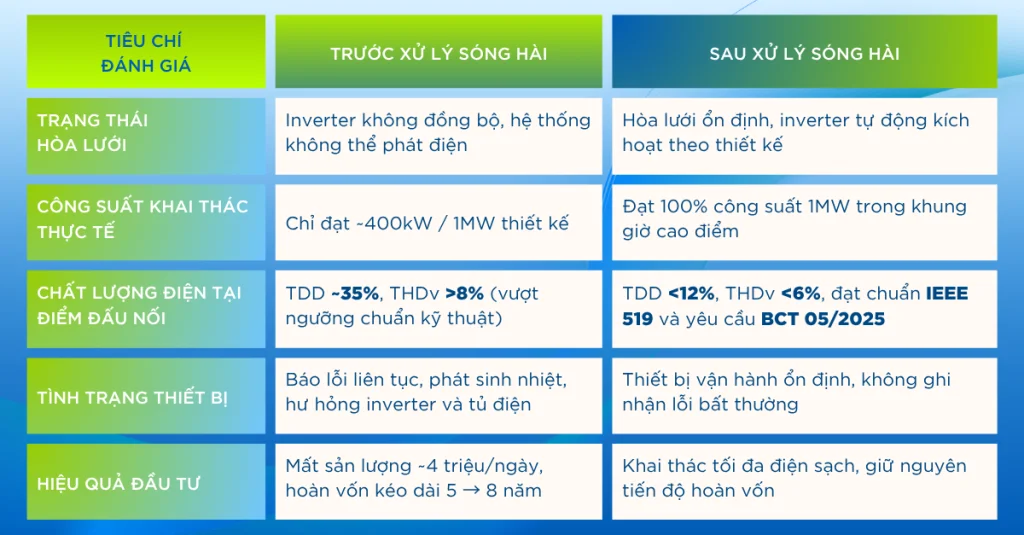
Immediately after the active harmonic filter was commissioned, both TDD and THDv were brought under control and reduced to acceptable operating levels.
According to the project data provided, TDD was reduced to below 12%, while THDv was brought below 6%, supporting compliance with the applicable IEEE 519 requirements and the technical requirements referenced under Circular No. 05/2025/TT-BCT.
The solar inverters successfully resynchronized with the electrical grid, allowing the PV system to resume stable operation at its designed capacity.
Results After Harmonic Mitigation
- TDD reduced to below 12%
- THDv controlled below 6%
- Successful inverter grid synchronization
- Stable solar PV operation at designed capacity
- No power quality alarms recorded during more than one month of monitoring
- No further nuisance circuit-breaker trips
- No further inverter faults associated with power quality
- Expected solar energy generation successfully restored
Beyond restoring solar power generation, the solution also contributed to improving the stability of the plant’s internal electrical network and reducing electrical interference that could affect other sensitive equipment within the facility.
According to a technical representative from the company responsible for deploying the solar PV system at the plant, the electrical network within the industrial zone had already experienced power quality instability. Once the solar generation system was connected, inverter faults and circuit-breaker trips occurred repeatedly due to harmonic interference.
After PowerMore addressed the harmonic distortion directly at the grid connection point, system operating conditions improved significantly:
- Voltage became more stable, allowing the inverters to operate continuously without recurring faults
- Higher-order harmonics were mitigated at the point of connection
- Electrical equipment no longer exhibited abnormal overheating associated with poor power quality
- Internal electrical losses were reduced, helping improve overall system efficiency
- Solar generation could be utilized more effectively during peak sunlight hours
- The solution was implemented without changing the original configuration or electrical design of the solar PV system
This project demonstrates that even a professionally designed solar PV installation can experience grid synchronization failures or unstable power generation when power quality at the point of connection does not meet the required technical conditions.
For industrial solar PV systems, maintaining power quality at the grid connection point is essential to:
- Reduce the risk of inverter faults, capacitor bank problems and system interruptions
- Prevent energy generation losses during peak solar production periods
- Protect high-value electrical equipment such as solar inverters, variable frequency drives and filtering equipment
- Support compliance with utility technical requirements and applicable IEEE 519 harmonic limits
- Provide a stable electrical foundation for future system capacity expansion
A solar PV system can only deliver its expected operational and financial performance when power quality is properly controlled at the grid connection point.
In the Quang Nam project, mitigating harmonic distortion at the correct location enabled the solar system to successfully reconnect to the grid, operate reliably and restore generation at its designed capacity.
PowerMore provides harmonic mitigation and power quality solutions at grid connection points, helping industrial solar PV systems operate reliably, meet technical requirements and achieve their designed performance.
PowerMore’s engineering team supports on-site surveys, harmonic measurements and power quality assessments for solar PV systems experiencing inverter faults, nuisance circuit-breaker trips, unstable operation or difficulties synchronizing with the grid.
Contact PowerMore for technical consultation and to schedule an on-site power quality assessment at your facility.